Efficient Agent Systems
Overview
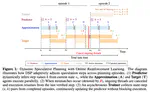
Efficiency for agents is not the same problem as efficiency for a single model call. The structure of the agent, not just the size of the model, drives the cost. Speculative execution lets a small model run ahead while a large one verifies, which cuts planning latency, and co-designing it with an interface that treats human interruption as a normal event rather than an exception makes the speedup usable. Making the speculation policy adaptive turns the latency and dollar cost tradeoff into a single parameter a practitioner can set. A related question sits above the model call entirely: given a pipeline with several stages, which model should serve each one. The gap between the best and worst assignment is large enough to dominate other optimizations, and search methods find near-optimal assignments at a fraction of the evaluation budget.

Publications