Trustworthy Agents: Safety, Risk, and Privacy
Overview
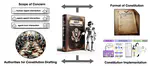
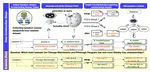
Agent trustworthiness is not a single property. Safety can be built into the planning loop itself, through an agent constitution that injects safety knowledge before a plan is generated, constrains generation while it happens, and inspects the result afterwards. Privacy is a separate axis: cloud models see everything a user sends them, so prompts can be obfuscated generatively and still complete the task. Beyond the model, there is the question of what a user is owed when an agent fails. Treating that as a settlement problem rather than a purely technical one turns trust from an implicit expectation about model behavior into an explicit and enforceable guarantee.

Publications
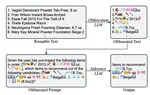
Cloud-based Large Language Models (LLMs) such as ChatGPT have become increasingly integral to daily operations. Nevertheless, they also introduce privacy concerns – firstly, numerous studies underscore the risks to user privacy posed by jailbreaking cloud-based LLMs; secondly, the LLM service providers have access to all user data, which deters individuals from confidently utilizing such services. To address such concerns, we propose a simple yet effective paradigm, EmojiPrompt, to protect user privacy. At its core, EmojiPrompt performs generative transformation, obfuscating private data within prompts with linguistic and non-linguistic elements before submitting them to cloud-based LLMs. We evaluate EmojiPrompt’s performance across 8 datasets from various domains. We also propose simulated inference attacks to assess EmojiPrompt’s ability to preserve user privacy. The results demonstrate that EmojiPrompt effectively obfuscates user private data, while largely maintaining, or even enhancing, performances compared to the unobfuscated version. Furthermore, EmojiPrompt’s atomic-level obfuscation allows it to function exclusively with cloud-based LLMs. For source code, please refer to this url.